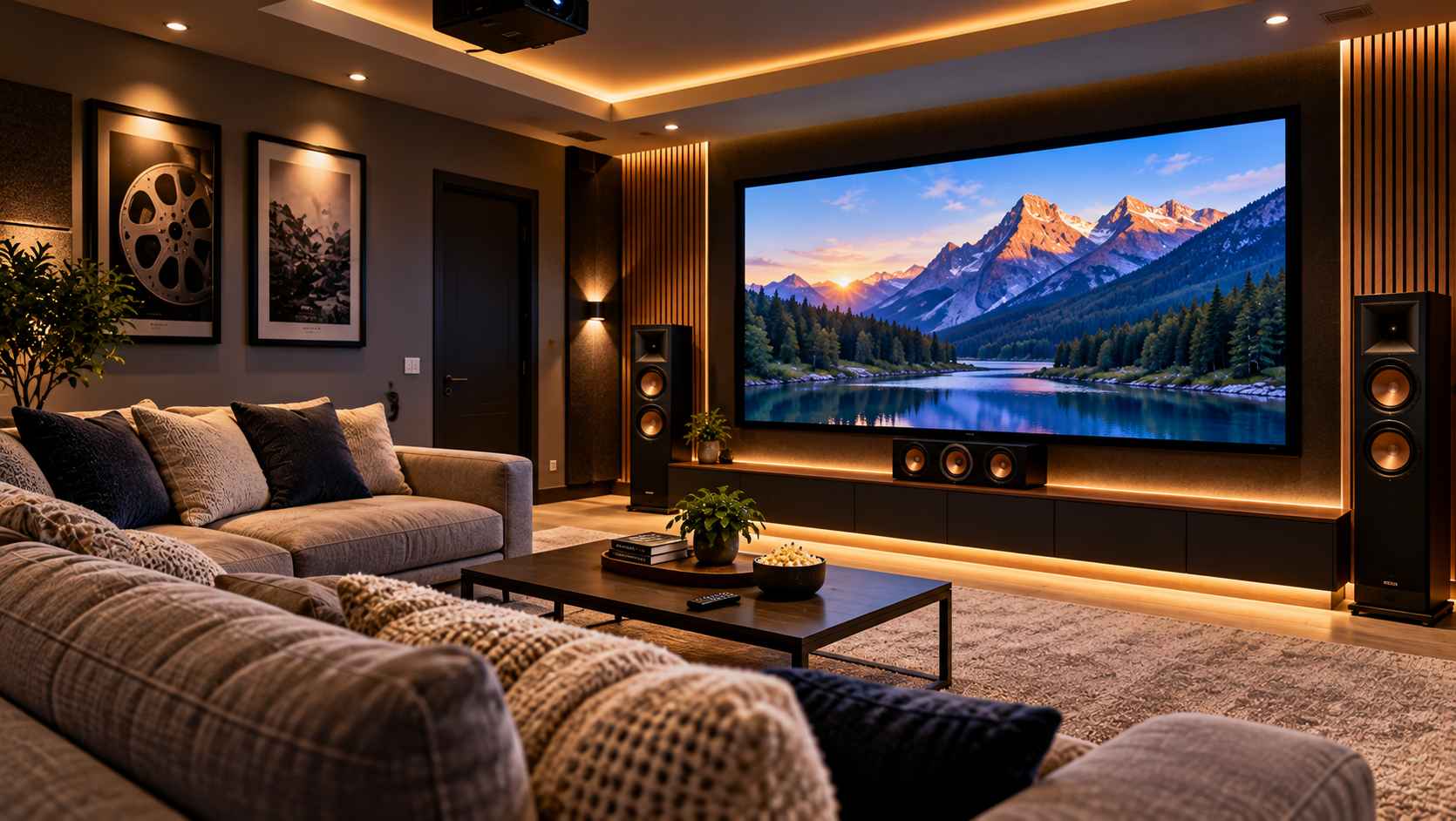
A home theatre can be much more than a large television and a comfortable sofa. When the room is planned properly, the screen, seating, speakers, lighting, cables, equipment, and networking can work together without making the space feel complicated.
The planning stage is therefore often more important than choosing individual pieces of equipment.
Before buying a television, projector, speakers, or other components, homeowners should think about how the room will actually be used. A little planning early can help avoid awkward seating arrangements, visible cables, poorly positioned speakers, and equipment that becomes difficult to access later.
Choose the Right Room
The best room for a home theatre is not necessarily the largest room in the house.
Consider how the space is currently used, how much natural light enters it, where doors and windows are located, and whether there is enough room for comfortable seating.
A dedicated room can provide more control over lighting, sound, and seating. However, a family room or multi-purpose basement can also work well when the technology is planned around the way the household uses the space.
Room shape matters as well. An unusually narrow room, large openings, or several doorways can influence where equipment and seating can be positioned.
Before making purchases, take accurate measurements and consider the entire room rather than focusing only on the wall where the screen will go.
Plan Seating Before Choosing the Screen
It is tempting to choose the display first and arrange the furniture afterward.
A better approach is to think about seating and viewing positions together.
Where will the primary viewers sit? Will there be more than one row of seating? Does everyone have a reasonably comfortable view?
The answers can influence the appropriate screen size and placement.
A screen that looks impressive in a showroom may not be the right choice for a particular room. Viewing distance, room dimensions, screen position, and personal preference all matter.
The same principle applies to seating. A large sectional may provide plenty of room for a family but leave limited space for speaker placement or circulation.
Planning the room around actual use creates a better balance between comfort and technology.
Think Carefully About Screen Placement
The screen is usually the visual centre of a home theatre, so its position deserves careful attention.
Consider viewing height, seating angles, natural light, reflections, and the location of other furniture.
Windows can create glare at certain times of day. A screen positioned too high may be uncomfortable for extended viewing. A location that works for television viewing might not work as well if the room is also used for gaming, sports, or entertaining.
If a display is being wall-mounted, also consider where power and signal connections will be located.
These details are easier to address before installation than after the room has been finished.
Plan Speaker Positions With the Room
Good audio planning starts with the room rather than simply selecting speakers.
The position of seating, walls, ceilings, furniture, and other surfaces can all influence how sound is experienced.
This is one reason it is useful to think about speaker placement before furniture and finishes are finalized.
Some homeowners may prefer visible speakers that complement the room, while others may want a more discreet appearance.
There is no single layout that works for every home theatre.
The important point is to determine where the listening area will be and consider how the audio system can support that arrangement.
Do Not Forget Sound Treatment
A room can contain excellent equipment and still be challenging acoustically.
Hard surfaces can reflect sound, while furniture, rugs, curtains, and other materials can affect how sound behaves within the room.
Sound treatment does not necessarily mean covering the walls with obvious acoustic panels.
Depending on the space, homeowners may consider a combination of furnishings, room finishes, and purpose-designed acoustic treatments.
The appropriate approach depends on the room and the desired experience.
For that reason, sound should be considered during the planning stage rather than treated as an issue to solve after every other decision has already been made.
Plan Cables Before the Walls Are Finished
Cable management is one of the easiest details to overlook.
It is also one of the details that can have a significant effect on how finished a home theatre looks.
Power, video, audio, networking, and control connections may all need to reach different parts of the room.
During a renovation, planning these routes before walls and ceilings are finished can provide more options for keeping connections organized and less visible.
Homeowners should also think about accessibility.
A completely hidden system may look clean, but equipment and connections may still need to be reached for maintenance, replacement, or future upgrades.
A good cable plan balances appearance with practical access.
Consider Equipment Storage and Ventilation
Home theatre equipment needs somewhere to live.
Receivers, streaming equipment, networking hardware, game consoles, and other components can quickly create clutter if there is no dedicated plan for them.
A media cabinet may be appropriate for one room, while another setup may benefit from a dedicated equipment location.
Ventilation should also be considered.
Electronic equipment can generate heat, so placing several components in a tightly enclosed space without adequate airflow may not be appropriate.
The equipment area should be practical, accessible, and compatible with the system being installed.
Think About Lighting From the Beginning
Lighting can dramatically change the experience of a home theatre.
A room that is completely dark may work well for certain viewing situations, but homeowners may still want enough light for moving around, finding a seat, reading, or using the room for activities other than watching a film.
Dimming can provide flexibility.
Different lighting levels can also support different uses. A brighter setting may work when the room is being used socially, while softer lighting may be preferable during a film.
Lighting controls can therefore be considered alongside the display and seating plan rather than added as an afterthought.
Plan Networking and Streaming
Modern home theatres often depend on a reliable network.
Streaming services, gaming, connected displays, control systems, and other devices may all depend on network connectivity.
The networking plan should account for where equipment will be located and how the system will be used.
This does not necessarily mean adding complicated technology.
It means recognizing that connectivity is now part of the entertainment experience and should be considered when planning the room.
A central equipment location can also help keep networking hardware organized rather than allowing routers, cables, and other devices to accumulate around the television.
Think About Integration Instead of Individual Devices
A home theatre can contain many separate components, but homeowners generally interact with the system as one experience.
If the television, audio system, streaming equipment, lighting, and other controls all operate independently, everyday use can become unnecessarily complicated.
When several systems need to work together, homeowners may choose to consult an AV specialist such as SIGAV during the planning process.
The objective is not to add technology simply because it is available. It is to create a system that makes sense for the room and the people using it.
Leave Room for Future Upgrades
Technology changes over time.
A home theatre designed around today’s equipment may eventually need a new display, different networking equipment, additional sources, or updated control options.
Homeowners do not need to predict exactly what technology will be available years from now.
Instead, they can plan for reasonable flexibility.
Accessible connections, suitable equipment space, thoughtful cable routes, and adequate networking capacity can make future changes easier.
This is particularly important when walls or ceilings are being opened during a renovation.
Match the System to the Household
A home theatre should reflect how the household actually spends time in the room.
A family that watches movies occasionally may have different priorities from someone who uses the space every day for films, gaming, sports, and music.
The same applies to seating, sound, lighting, and control systems.
More equipment does not automatically create a better room.
A simpler system that everyone can operate comfortably may be more useful than a highly complicated setup with features that rarely get used.
Think About the Room Beyond Movie Night
A home theatre does not necessarily need to serve only one purpose.
Depending on the room, it might also function as a family gathering space, gaming area, sports-watching room, or place for listening to music.
Planning for these activities can influence seating, lighting, storage, and control options.
A flexible room may remain useful for longer because it can adapt as household interests change.
This is another reason to start with how the space will be used rather than starting with a shopping list.
Make the Planning Decisions Before the Shopping Decisions
Creating a successful home theatre is less about buying the biggest screen or the most equipment and more about making the major decisions in the right order.
Start with the room.
Then consider seating, viewing position, display placement, audio, lighting, cables, equipment storage, networking, and future flexibility.
Once those factors are understood, it becomes much easier to determine what equipment actually belongs in the space.
A well-planned home theatre should feel comfortable when it is being used and relatively uncomplicated when it is not. The technology should support the room rather than dictate how the room functions.
Taking the time to plan before purchasing equipment can help homeowners create an entertainment space that looks considered, works comfortably, and remains adaptable as household needs change.